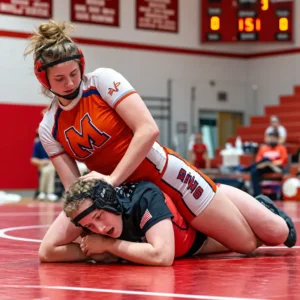
A wrestling outfit is called a singlet. It is a one-piece, form-fitting uniform that covers the torso and upper legs, and it is the standard competition uniform in amateur wrestling across the United States. You will see it at youth tournaments, high school dual meets, college championships, and the Olympic Games.
If you have ever watched a match and wondered why wrestlers wear that stretchy, sleeveless suit, you are not alone. At first glance, it looks unusual, but nearly every detail of a singlet exists for a reason. In this guide, we’ll cover what a singlet is, where it came from, why wrestlers wear it, what other outfits show up in the sport, and how to choose, fit, and care for the right one. If your team is shopping for new gear, you can also browse our custom wrestling uniforms to see singlets, rash guards, and warm-ups built for the mat.
What Do You Call a Wrestling Outfit?
The name depends on the kind of wrestling you are talking about. In amateur wrestling, which includes high school, college, freestyle, Greco-Roman, and Olympic competition, the outfit is a singlet. In professional wrestling, the entertainment style you see on television, athletes wear trunks, long tights, or custom bodysuits that match their characters. During practice, many wrestlers switch to compression shirts and shorts or a two-piece set. In grappling and jiu-jitsu, athletes usually wear rash guards and fight shorts.
So if someone asks, “What is the wrestling suit called?”, the safest and most accurate answer is a singlet.
What Is a Wrestling Singlet?
A singlet is a sleeveless, one-piece athletic uniform made from stretchy, sweat-wicking fabric. It has two shoulder straps, a scooped neckline, and leg openings that sit high on the thighs. The fit is snug on purpose. A singlet should feel like a second skin, not like a loose jersey.
Most singlets are made from a polyester-spandex blend. Polyester pulls sweat away from the body and dries quickly, which matters in a sport where athletes work up a heavy sweat within minutes. Spandex gives the fabric its stretch, so wrestlers can drop into deep stances, shoot for takedowns, and bridge out of bad positions without the uniform fighting them.
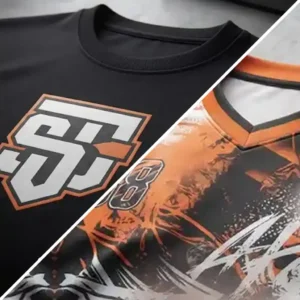
Singlets also carry a team’s identity. Most show the school or club name, a mascot, and team colors, and many use custom sublimated singlets where the artwork is printed directly into the fabric. In dual meets, the two wrestlers usually wear different colors, often red and green or red and blue, so referees and scorekeepers can tell them apart instantly.
Where Does the Word “Singlet” Come From?
The word “singlet” was first used for a single layer of clothing, like a simple undershirt or sleeveless tunic. Over time, athletes adopted it for one-piece uniforms, and wrestling is the sport that made the word familiar to American sports fans.
A Short History of Wrestling Uniforms
Wrestling is one of the oldest sports in the world, and what athletes wear has changed a great deal over the centuries.
In ancient Greece, wrestlers often competed with little or no clothing. They rubbed their bodies with oil and covered themselves in dust, and the focus was entirely on strength, balance, and skill. As the sport moved indoors and became more organized, clothing became standard. Early modern wrestlers wore heavy wool or cotton garments that soaked up sweat and felt weighty on the mat.
By the early 1900s, wrestlers commonly wore tights and trunks with separate tops. Then, in the middle of the century, the lightweight knit singlet took over amateur wrestling. It was easier to move in, harder to grab, and gave referees a clear view of every hold. In later decades, spandex blends made singlets even more comfortable, and today’s sublimation printing allows teams to create bright, fully custom designs that do not crack, peel, or fade.
Why Do Wrestlers Wear Singlets?
Wrestling puts two athletes in constant, close contact, so the uniform has to do more than look good. The singlet solves several practical problems at once.
The first is safety. Loose shorts, belts, buttons, and zippers can catch fingers, toes, or jewelry during a scramble. A singlet has nothing to snag, which lowers the risk of accidental injuries.
The second is fairness. Wrestling rewards technique and strength, not who can grab the most fabric. A tight uniform keeps opponents from using loose clothing as a handle or a shield.
The third is freedom of movement. A wrestler needs to shoot, sprawl, roll, and bridge without anything holding them back. Four-way stretch fabric moves with the body in every direction.
Finally, there is clear officiating. Referees award points for takedowns, escapes, reversals, and near falls, and they need to see where arms, legs, and shoulders are at all times. A fitted uniform gives a clearer view of body position and movement. On top of that, lightweight, breathable fabric helps manage sweat, and a single-layer uniform is quick to wash and dry, which supports good hygiene in a contact sport.
Types of Wrestling Outfits
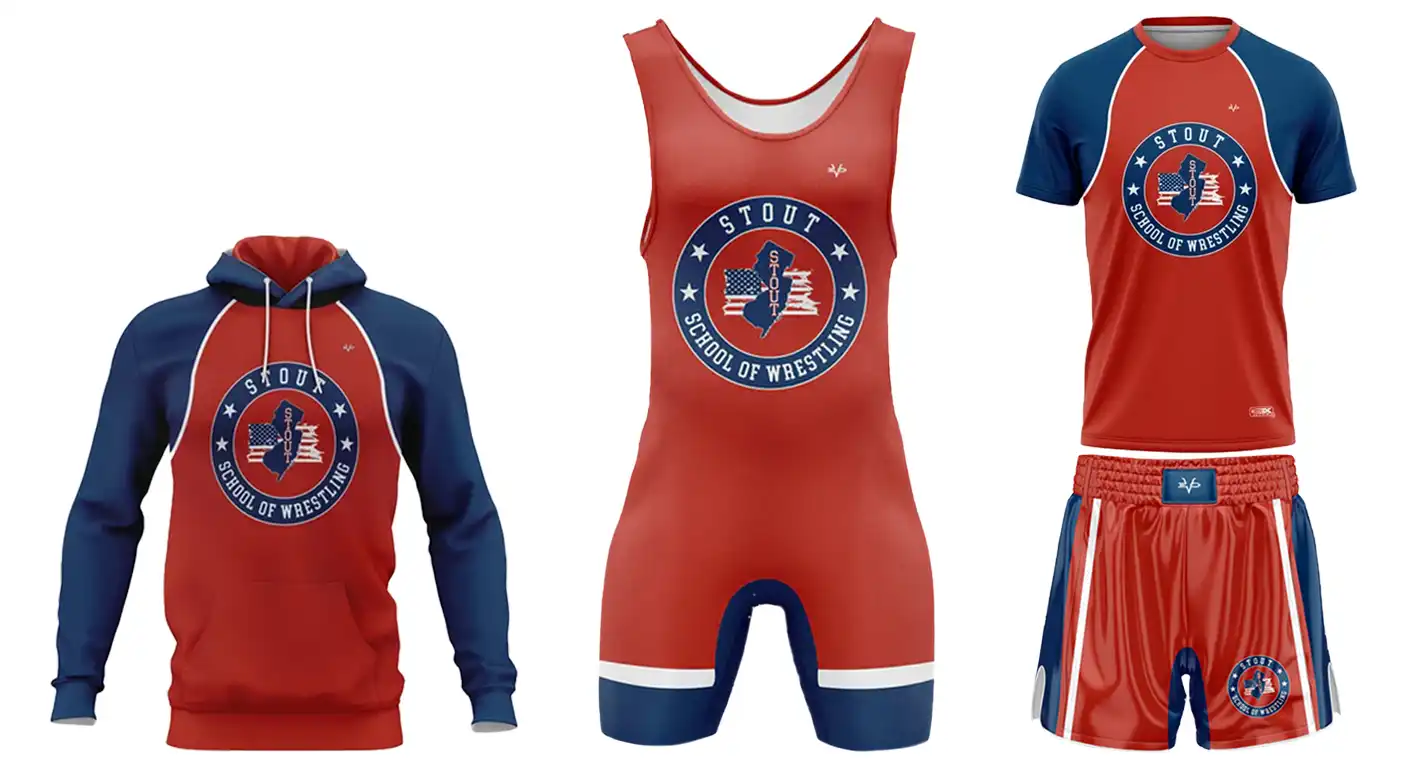
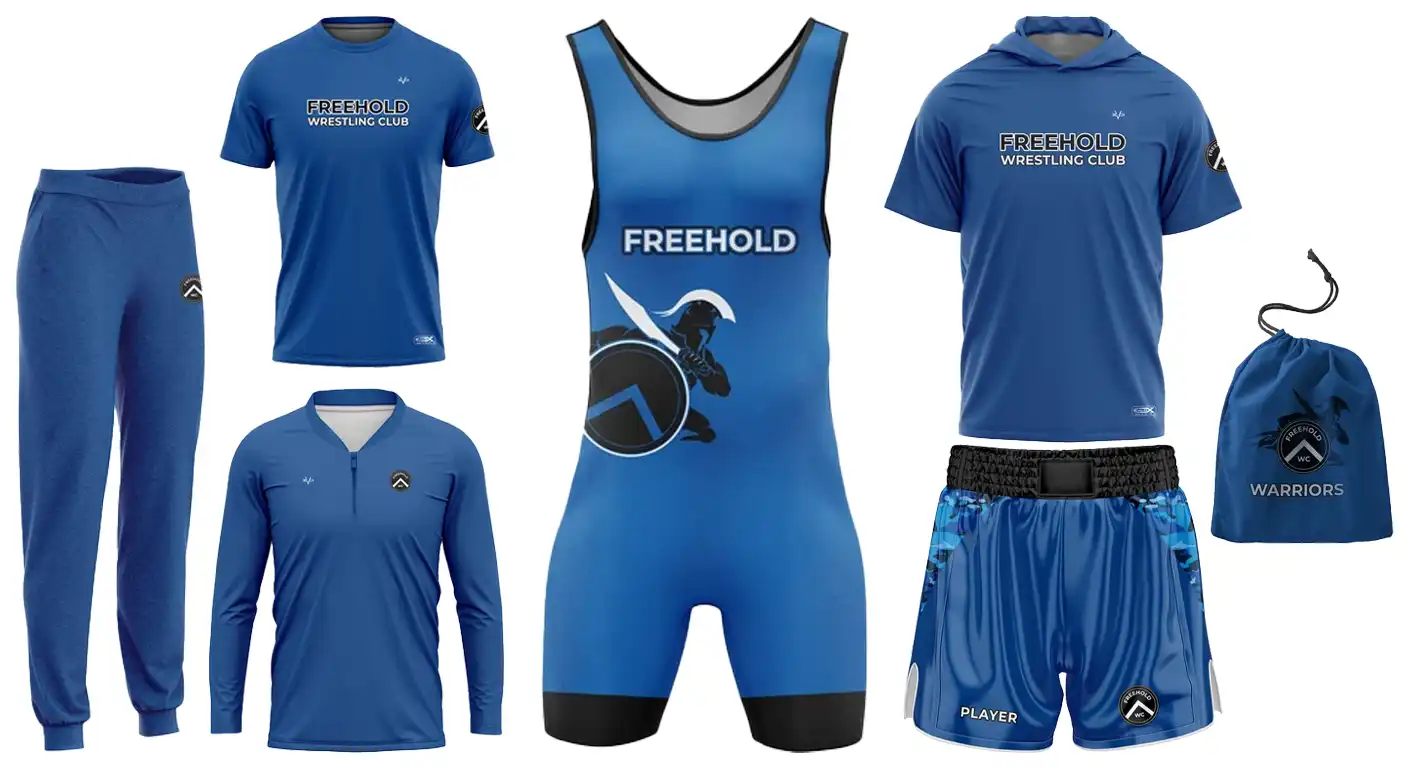
The singlet is the main piece, but it is not the only thing wrestlers wear. The right outfit depends on the setting, the rules, and the type of training.
The traditional singlet is the standard competition uniform and is required in most sanctioned amateur events in the U.S. It is one-piece, sleeveless, and available in stock or custom designs.
A two-piece wrestling uniform, made of a fitted shirt and matching shorts, is allowed in some youth and recreational programs. Beginners sometimes like it because it feels closer to regular sportswear. However, many official school competitions do not accept it, so always check the rules first.
Compression gear includes tight shirts and shorts that wrestlers wear in practice, in warm-ups, and sometimes under a singlet. Compression keeps muscles warm, wicks sweat, and reduces friction, which makes it a popular base layer.
Rash guards are close-fitting shirts common in no-gi grappling and submission wrestling. They protect the skin from mat burn and reduce direct skin contact between athletes. Many programs now order matching custom rash guards to go with their team singlets.
Fight shorts are lightweight, flexible shorts worn in mixed martial arts and some forms of grappling. They are built for scrambling and quick transitions, and teams often pair custom fight shorts with a rash guard for training.
Warm-ups and sweats include matching jackets, pants, and hoodies worn before and after matches. They keep muscles warm between rounds and carry team branding, and many wrestlers also use sweatsuits when managing weight. If your team wants a unified travel look, custom warm-ups are a simple way to get one.
Professional wrestling gear is a different world. Because pro wrestling is entertainment, athletes wear trunks, long tights, bodysuits, masks, capes, boots, and wrist tape designed to build a memorable character. Safety rules matter less than showmanship here, which is the opposite of amateur wrestling.
Wrestling Singlet vs. Other Athletic Uniforms
Several sports use one-piece garments, and people often mix them up. The table below shows how the wrestling singlet compares.
| Outfit | Sport | Main Difference |
| Wrestling singlet | Amateur wrestling | Thick, durable, snug, built for contact |
| Track singlet | Track and field | Lighter and looser, made for running |
| Weightlifting singlet | Weightlifting | Reinforced for heavy lifts |
| Racing swimsuit | Swimming | Water-resistant and minimal |
| Leotard or unitard | Gymnastics, dance | Often has sleeves or full legs |
What sets the wrestling singlet apart is durability. It has to survive constant pulling, hard mat contact, and frequent washing, so it is usually sturdier than the other uniforms on this list.
Types of Wrestling Singlets
Even inside the singlet category, there are plenty of choices. Understanding the differences makes shopping much easier.
By Cut
The cut changes how much coverage and freedom you get. A standard cut has a classic shape with moderate leg openings. A low-cut leg gives slightly more coverage on the upper thighs, while a high-cut leg gives more freedom around the hips. The neckline also varies, from a deeper scoop to a higher neck, which changes comfort and chest coverage.
By Design
Solid-color singlets are simple and affordable, and color-block singlets use two or more colors in panels. Fully sublimated singlets go a step further, with artwork printed into the fabric so the design never cracks or peels. Teams that want matching uniforms for the whole roster often choose team uniforms built around their school or club branding.
By Fabric
Poly-spandex blends are the most common because they are light, stretchy, and fast-drying. Heavier knits are built for tough practices and long seasons. Some performance fabrics add antimicrobial treatment or extra stretch zones for comfort.
By Age and Gender
Youth singlets are sized for kids and often leave a little room to grow. Men’s singlets use the standard cut for boys and men. Women’s singlets have a tailored chest and torso fit designed for female athletes. Girls’ and women’s wrestling is one of the fastest-growing high school sports in the country, so more brands now make gear built specifically for female wrestlers.
Need custom singlets for your team?
Evo9X makes full-dye sublimated wrestling uniforms right here in the USA. No minimums, no set-up fees, and a 7-14 business day turnaround.
How Should a Wrestling Singlet Fit?
Fit is the most important part of choosing a singlet. A poor fit can limit movement, distract you during a match, or even draw a penalty from officials.
A good singlet fits close to the body without cutting off circulation. You should be able to breathe deeply, drop into a stance, reach overhead, and sprawl comfortably. The straps should lie flat and stay on your shoulders, and the leg openings should sit at the upper thigh without pinching. There should be no loose fabric in the midsection or crotch.
If a singlet is too small, you will notice straps digging into your shoulders, leg openings cutting into your skin, and difficulty taking a full breath. The fabric may also look overstretched or see-through. If it is too big, fabric will bag around the stomach, straps will slide off, the material will twist during movement, and opponents can grab the loose areas.
To get the right size, measure your chest, waist, and torso length, then compare your numbers to the brand’s size chart, since sizing varies between companies. Try the singlet on and move around in it before the season starts. For growing kids, avoid buying much larger than needed, because a baggy singlet is both unsafe and likely to be flagged by referees.
What Do Wrestlers Wear Under a Singlet?
This is one of the most common questions from new wrestlers and their parents. The goal is comfort without bulk. Anything underneath should be thin, smooth, and made from athletic fabric.
Many wrestlers wear nothing extra in competition. Others choose compression shorts, which create a smooth base layer and reduce friction. Some wear an athletic supporter or cup for protection, especially in practice, and many female wrestlers wear a sports bra for support and comfort.
What you want to avoid is regular cotton underwear or boxer shorts. Cotton bunches up, holds moisture, and causes chafing, and visible lines or tags can be a distraction. Also make sure nothing shows outside the singlet. When in doubt, ask your coach about your league’s rules.
How to Care for a Wrestling Singlet
A good singlet is an investment, and the right care routine helps it last all season. Care also matters for health, because sweat, bacteria, and mat dirt build up quickly on athletic fabric. A damp singlet left in a gym bag can start to smell and may contribute to skin problems.
Wash your singlet soon after every practice or match. Use cold water and a gentle detergent, and turn the singlet inside out to protect printed designs. Skip bleach and fabric softener, since both can break down stretch fibers and moisture-wicking ability. Whenever possible, let it air dry, and hang it up instead of leaving it in your bag.
A few habits can shorten a singlet’s life: washing in hot water, drying on high heat, washing it with rough items like jeans or clothes with zippers, and storing it while still damp.
Common Rules and Regulations
Uniform rules differ by state, league, and age group, but a few standards come up often. Most school-sponsored wrestling in the U.S. requires a singlet or approved uniform during official matches, and officials can stop a match if a wrestler’s gear does not comply.
Teams usually need to wear assigned colors, and some events limit logo size and placement. Undergarments should not show outside the singlet, jewelry is not allowed on the mat, and wrestlers wear shoes with thin, flexible soles. Many leagues also require headgear.
Before you order anything, ask your coach a few quick questions. What colors does the team use? Is a singlet required, or is a two-piece set allowed? Are there rules for logo size or placement? Are headgear and mouthguards required? A short conversation now can save you from buying a uniform you cannot use.
Other Gear Every Wrestler Needs
A singlet is only one part of a wrestler’s kit. Wrestling shoes are lightweight, flexible, and grippy, with ankle support that helps on quick footwork. Headgear protects the ears and helps prevent cauliflower ear, a common wrestling injury. A mouthguard protects teeth and lowers the risk of mouth injuries during scrambles.
Knee pads reduce mat burn and soften impact in drills and takedowns. A compression base layer keeps muscles warm, and a warm-up jacket and pants help you stay loose between matches. Finally, a ventilated gym bag lets gear dry between sessions, and a towel, water bottle, and spare socks and shirt round out the basics.
How to Choose the Right Wrestling Outfit
Shopping for wrestling gear feels overwhelming at first, but a simple process makes it easy. Start by knowing your level, since youth, high school, college, and club wrestling can each have different requirements. Then confirm your league’s rules on colors, logos, and required styles.
Next, measure carefully and use a real size chart. Look at the fabric, and choose stretchy, moisture-wicking material. Check the stitching too, because strong, flat seams last longer. Decide whether stock or custom is right for you. Stock singlets are quick and affordable, while custom singlets build team identity. Set a realistic budget, because a reliable singlet does not have to be the most expensive one. And if you are ordering custom gear, order early, since production and shipping take time.
A quality singlet has durable, breathable fabric, flat reinforced seams, colorfast printing that will not fade, comfortable straps and leg openings, and a true-to-size fit.
Common Mistakes to Avoid
Many families and teams make the same few mistakes when buying wrestling gear. The biggest is buying too big so a child can “grow into” the singlet. A loose singlet is unsafe and may be flagged by referees. Wearing cotton underneath is another frequent error, since it traps sweat and rubs the skin. Skipping the wash can spread skin infections, and ignoring the rulebook can leave you with a uniform that is not allowed.
It is also easy to choose looks over comfort, but a great design means little if the fit is wrong. Ordering late is a problem for custom gear, and washing in hot water or drying on high heat breaks down stretch fibers.
Frequently Asked Questions
What is a wrestling outfit called?
A wrestling outfit is called a singlet. It is a one-piece, form-fitting uniform used in amateur wrestling.
What is the one-piece wrestling suit called?
It is called a singlet. People may also say wrestling uniform or wrestling suit, but “singlet” is the correct term.
Why do wrestlers wear tight singlets?
Tight singlets improve safety, stop opponents from grabbing loose fabric, allow full movement, and help referees see body position clearly.
What is the difference between a singlet and a unitard?
A singlet is sleeveless with leg openings at the upper thigh and is mainly used for wrestling. A unitard covers more of the body, often including full legs and sometimes arms, and is used in dance and gymnastics.
Do wrestlers wear anything under a singlet?
Some wear nothing. Others wear compression shorts, a supporter, or a sports bra. Cotton underwear is not recommended because it bunches and chafes.
Are singlets required in wrestling?
In most sanctioned high school, college, and Olympic-style events in the U.S., yes. Some youth or recreational leagues allow other uniforms, so check the rules first.
What do female wrestlers wear?
Female wrestlers usually wear singlets designed for women, often with a tailored chest and torso fit. Many also wear a sports bra underneath.
What do pro wrestlers wear?
Pro wrestlers wear trunks, tights, bodysuits, or custom singlets, often with capes, masks, or boots, to build a memorable character.
What is a wrestling singlet made of?
Most singlets are made of polyester and spandex. This blend wicks sweat and stretches easily.
How do you wash a wrestling singlet?
Wash it soon after use in cold water with gentle detergent. Turn it inside out, skip bleach and fabric softener, and let it air dry.
How tight should a singlet be?
Snug but comfortable. You should be able to breathe deeply and move freely, with no sagging fabric or digging straps.
Final Thoughts
A wrestling outfit is called a singlet. It has a long history, and every detail serves a purpose: safety, fairness, mobility, and clear officiating.
Whether you are a first-year wrestler, a parent shopping for your child, or a coach outfitting a whole team, the right choice comes down to fit, fabric, and your league’s rules. Get those right, and you will step onto the mat comfortable, confident, and ready to compete.
Ready to gear up your wrestlers?
Tell us your colors, logos, and sizes. Our in-house design team will build your singlets, rash guards, and warm-ups to match.
At Evo9X, we believe every champion starts with the right gear and the right mindset. Choose your uniform with confidence, train hard, and keep evolving.