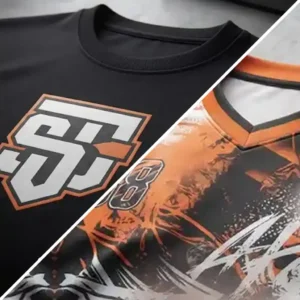
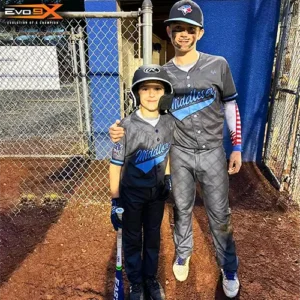
If you’re outfitting a basketball, football, baseball, soccer, or softball team, sublimation is almost always the smarter call for your custom sports uniforms. The design gets embedded right into the fabric itself, so names, numbers, and logos don’t crack, peel, or fade after a full season of games, not after a hundred trips through the wash. Screen printing still earns its spot, but it’s really built for cotton fan gear, tight-budget orders, or simple one- or two-color designs.
That’s the quick answer. But if you’re actually about to spend real money outfitting a team, it’s worth understanding why, because the “right” choice shifts depending on your sport, your budget, and how many uniforms you’re ordering. Let’s get into it.
At its core, sublimation uses heat to turn ink into a gas that bonds permanently with polyester fibers. The design doesn’t sit on the fabric; it becomes part of it.
Here’s what that actually looks like on the production floor: a design gets printed onto special transfer paper, then pressed against the uniform under intense heat, usually somewhere around 400°F — for about 45 to 60 seconds. That heat is what turns the solid ink into gas, opening up the polyester fibers just enough for the color to settle inside. As the fabric cools back down, those fibers close up again, and the color is locked in for good.
What Is Sublimation Printing?
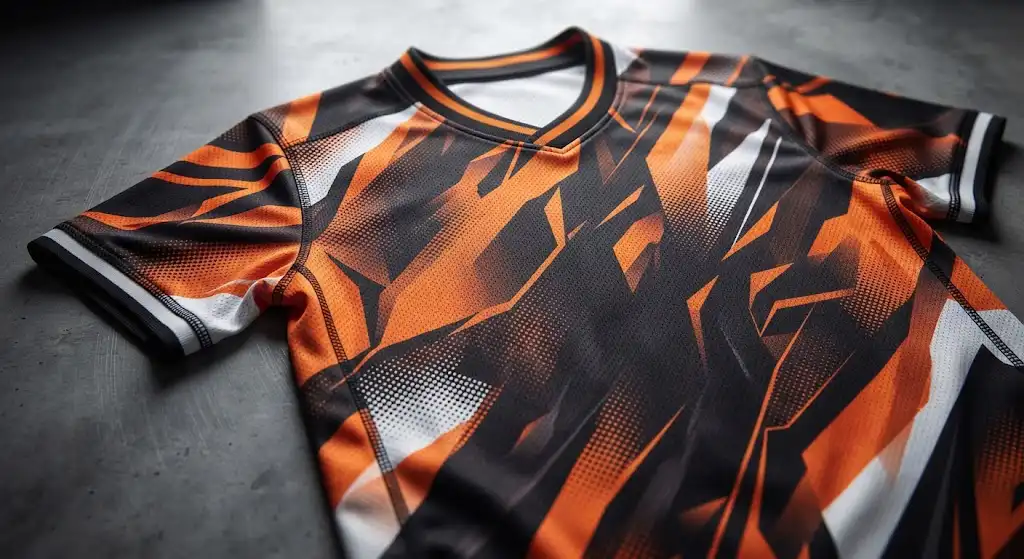
Since the ink is now part of the fiber rather than sitting on top of it, there’s nothing left to crack, peel, or scratch away. That’s why sublimated jerseys can survive an entire season of games, sweat, endless wash cycles, and still come out the other side looking almost new. That’s why it’s become the go-to method for custom sports uniforms across baseball, basketball, football, soccer, lacrosse, and wrestling.
What Is Screen Printing?
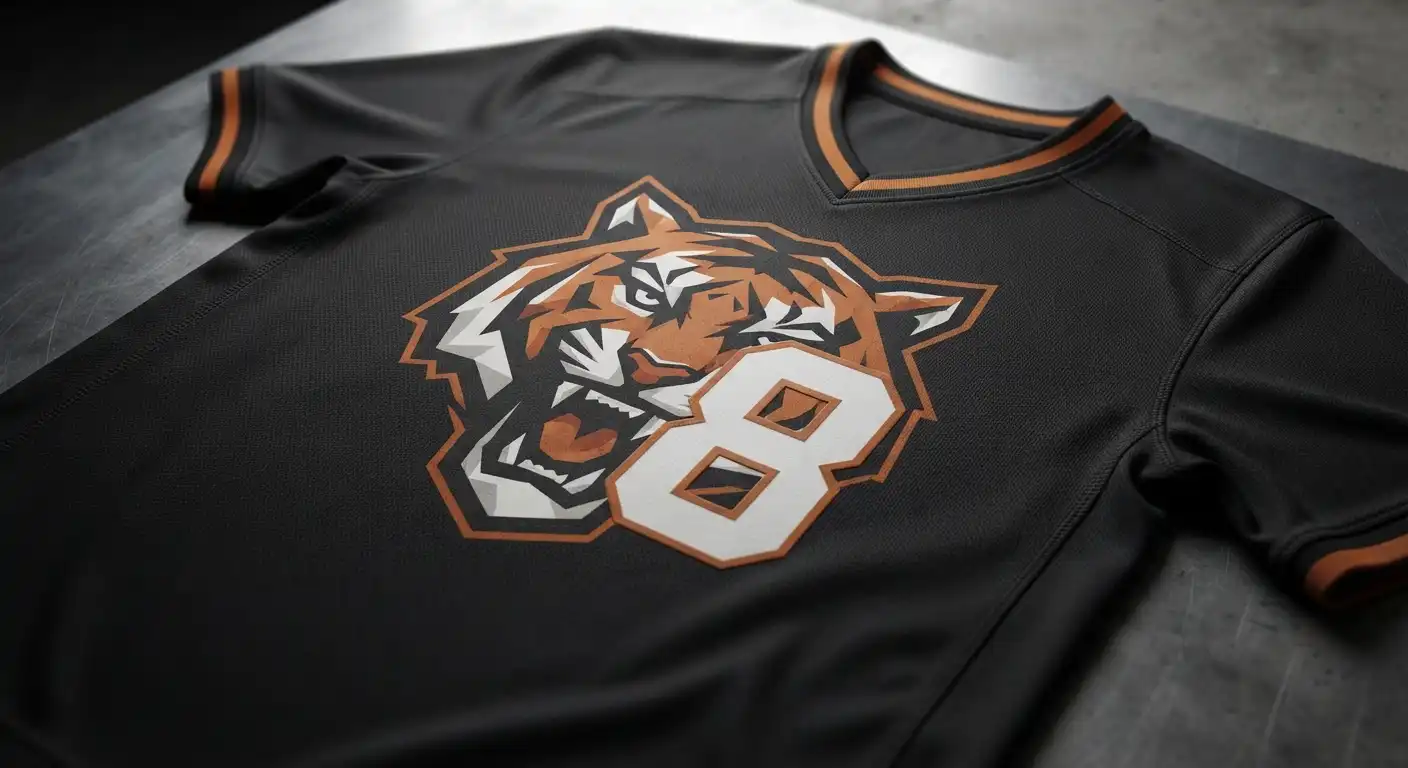
Screen printing works differently. Ink gets pushed through a mesh stencil onto the surface of the fabric, building up a physical layer of color that rests on top of the material instead of soaking into it.
Every color in the design needs its own screen and its own separate pass through the press, so a five-color logo means five different print runs, layered one on top of another. That layering is actually what gives screen printing its bold, punchy look, and it’s why it still shows up so well on dark fabric, which happens to be a weak spot for sublimation.
The catch is durability. Because that ink is just sitting on the surface rather than bonded into the fibers, it’s a lot more exposed, especially on stretchy athletic fabric that’s constantly flexing during play. Cracking and peeling become a matter of when, not if.
So What’s the Real Difference?
It comes down to this: sublimation dyes the fabric itself, so the print lasts exactly as long as the shirt does. Screen printing, on the other hand, adds a layer of ink on top of the fabric
| Factor | Sublimation | Screen Printing |
| How it works | Dye becomes a gas and bonds inside the fabric fibers | Ink is layered on top of the fabric’s surface |
| Durability | Won’t crack, peel, or fade; lasts the life of the garment | Can crack, peel, or fade with heavy wear and washing |
| Feel on skin | Feels like the fabric; no texture change | Adds a slightly raised, sometimes stiffer texture |
| Color limits | Unlimited colors, gradients, and photo-quality detail at no extra cost | Each color needs its own screen; more colors = more cost |
| Works on dark fabric? | Struggles: sublimation ink is translucent | Yes, opaque ink shows clearly on any color |
| Fabric type | Polyester or poly-blend (65%+ polyester) only | Works on cotton, polyester, and blends |
| Best for small orders | Yes, no setup cost per color | Not ideal; screen setup costs hurt small runs |
| Best for large, simple-color orders | Still works, but less cost-efficient | Yes, cost per unit drops as volume increases |
| Breathability | Fabric keeps its original moisture-wicking performance | Ink layer can slightly reduce breathability |
One distinction really explains almost everything else on this list: durability, feel, color options, cost it all traces back to whether the color lives inside the fabric or just on top of it.
Ready to Design Your Team’s Jersey?’s Uniform Design?
Not sure which method fits your sport and budget? EVO9X’s in-house designers can walk you through it and build a free mockup for your custom sports uniform before you spend a dollar on production.
Which Method Lasts Longer on a Team Uniform?
Sublimation lasts longer, plain and simple. Because the dye is bonded inside the fabric fibers instead of sitting on the surface, there’s no ink layer left to crack or flake off — even after a full season of sweat, contact, and repeated washing.
Screen-printed uniforms can absolutely hold up for a season or two, but the surface ink is always the weak point. Stretchy performance fabric, the kind used in basketball, wrestling, and soccer uniforms, flexes constantly during play, and that flexing is exactly what causes screen-printed ink to crack over time. Sublimated ink doesn’t have that problem, since there’s nothing rigid sitting on top of the fabric to crack in the first place; it moves right along with it.
Which Method Gives Sharper, More Readable Numbers?
Sublimation, hands down. It produces sharper, more precise numbers with clean edges, gradients, and outlines. Screen printing produces bold, high-contrast numbers that read well from a distance but lose fine detail up close.
This matters more than people expect. Referees, scorers, and broadcast cameras all rely on legible numbers, and a number that’s cracked or faded halfway through the season becomes a real problem, not just a cosmetic one. Sublimation holds its shape and color through the whole season because the number is literally part of the shirt. Screen printing still reads fine on day one; it’s just the method more likely to degrade first if the uniform sees heavy wear.
Which Method Works Better on Dark-Colored Uniforms?
Here’s where screen printing actually has the edge. Sublimation ink is translucent, so it can’t produce truly opaque colors, especially white on a dark base fabric without some extra steps.
This is one of the few categories where screen printing wins on pure technical merit. If your team’s primary color is black or navy and you need a bright white logo to pop against it, screen printing or a hybrid approach combining sublimated dark polyester with screen-printed accents is usually the more reliable route.
Does Sublimation or Screen Printing Feel Better During a Game?
Sublimation, easily. Because the dye becomes part of the fabric, there’s no added texture, no stiff patches, and no impact on the fabric’s breathability or moisture-wicking properties. Screen printing adds a thin layer of ink that can feel slightly raised and, in heavier designs, can even reduce airflow through the fabric.
For a team playing in hot weather or an indoor gym with limited airflow, this isn’t a minor detail; it’s a real comfort and performance factor over the course of a game.
Which Is Cheaper for a Small Team Order?
Sublimation, usually. It has no per-color setup cost, so a 10-jersey order with a five-color design ends up costing about the same to produce as a one-color design.
Screen printing works the opposite way. Every color in the design needs its own screen, and setting those screens up costs money regardless of how many jerseys you’re printing. On a small order, that setup cost gets spread across very few shirts, which drives the per-unit price way up.
Which Is Cheaper for a Large Team Order?
For large orders with simple, one- or two-color designs, screen printing can actually come out cheaper. The setup cost gets spread across hundreds of units, and simple ink layouts print fast.
But that price advantage shrinks quickly once a design gets more detailed. A multi-color logo, a gradient, or player-specific numbering pushes screen printing’s cost right back up. At that point, sublimation is usually the better value even at scale, since it never charges extra per color.
Can You Mix Sublimation and Screen Printing on the Same Uniform?
Yes, actually, and plenty of teams do. Many sublimate the base uniform for the jersey’s main colors and pattern, then bring in screen printing or heat-transfer vinyl for sponsor logos, small accents, or dark-on-dark details that sublimation can’t quite pull off on its own.
This hybrid approach shows up a lot in youth and school sports, where budgets are tight, but teams still want that full-color sublimated look with a crisp, opaque school logo or sponsor patch layered on top.
Want Your Team’s Uniform Designed the Right Way?’s Uniform Design?
Whether you need a fully sublimated jersey or a hybrid design with screen-printed accents, EVO9X’s designers can tell you exactly what will and won’t work for your team’s colors and budget before you place an order.
Which Sports Should Use Sublimation vs Screen Printing?
Sports with constant movement, stretching, and frequent washing basketball, soccer, wrestling, football, and softball benefit most from sublimation. Screen printing still makes sense for cotton fan shirts, spirit wear, and simple one-color team gear that isn’t worn during actual competition.
Here’s a quick breakdown by sport:
- Basketball: Sublimation. Uniforms stretch constantly and get washed after every game.
- Football: Sublimation for the jersey body; screen printing or vinyl is common for player names on some budget programs.
- Soccer: Sublimation. Lightweight, breathable fabric plus heavy movement makes it the clear winner.
- Baseball & softball: Either works, since these uniforms stretch less than basketball or soccer kits, but sublimation still wins on long-term appearance.
- Wrestling: Sublimation, almost without exception. Singlets stretch more than any other uniform in team sports, and screen-printed ink cracks fastest here.
- Lacrosse & hockey: Sublimation again; both sports put uniforms through heavy contact and frequent washing, exactly the conditions sublimation is built for.
- Fan shirts & spirit wear: Screen printing is often fine, since these are usually cotton and not worn during physical competition.
Whatever the sport, EVO9X builds custom sports uniforms using the method that actually fits how your team plays, not just what’s cheapest to produce.
How Do You Wash and Care for Each Type of Uniform?
Sublimated uniforms are washed like any normal athletic garment: cold water, mild detergent, and a low or no-heat dry cycle. Screen-printed uniforms need a bit more caution, since heat and friction are exactly what break down surface ink over time.
For sublimated jerseys, the ink is part of the fabric, so there’s very little you can do to damage the print through normal washing. The bigger risk is to the fabric itself, not the design, so stick to cold or warm water and skip the fabric softener, which can clog the moisture-wicking fibers.
For screen-printed uniforms, a few extra habits go a long way:
- Wash inside-out to reduce surface friction on the printed side.
- Skip the dryer when possible, or use a low-heat setting; high heat is one of the fastest ways to soften and crack surface ink.
- Never iron directly over a screen-printed number or logo.
- Avoid bleach, which can yellow or lift printed ink faster than it fades the fabric.
If a team is rotating uniforms through a full season of games and practices, this difference in care adds up fast. Sublimated gear is far more forgiving for busy equipment managers who don’t exactly have time to hand-wash forty jerseys after every game.
Which Method Offers Better Long-Term Value for Multi-Season Programs?
Sublimation, for one simple reason: the print doesn’t degrade with each wash cycle the way screen printing can.
This is where the math really changes for school athletic departments, club programs, and rec leagues that can’t afford to replace uniforms every year. A screen-printed uniform might cost less on day one, but if the numbers start cracking by year two, the program is often back to reordering sooner than expected. A sublimated uniform can cost a bit more upfront, but it’s built to look the way it did on day one for as long as the fabric itself holds up often three to five seasons of regular use, depending on how well it’s cared for.
For programs ordering once and expecting the uniforms to last, that difference in lifespan is usually worth more than whatever small savings screen printing offers on the initial order.
Common Myths About Sublimation and Screen Printing
The biggest myths are that sublimation always costs more, that screen printing always looks cheap, and that both methods work on any fabric. None of that holds up.
- “Sublimation always costs more.” Not for small orders or detailed designs, sublimation often wins on price once you factor in the per-color setup costs screen printing carries.
- “Screen printing always looks cheap.” A well-executed, simple screen-printed logo on the right fabric can look just as professional as a sublimated design; it just has less flexibility for detail.
- “You can sublimate any fabric.” Only polyester and poly-blends with at least 65% polyester content will actually hold sublimation ink. Cotton uniforms are off the table for this method, full stop.
- “Screen printing always cracks quickly.” Quality varies a lot by printer and ink type. A well-applied screen print on the right fabric can genuinely last a full season. It’s just more exposed to wear by design.
Sublimation vs Screen Printing: Which Should Your Team Actually Choose?
Choose sublimation if your team competes in the uniform, needs a detailed or multi-color design, or washes it frequently. Choose screen printing if you’re on a tight budget, need a simple one- or two-color design, are printing on cotton, or need bright, opaque colors on dark fabric.
Neither method is universally “better”; they’re just built for different jobs. Sublimation wins on durability, comfort, and design flexibility. Screen printing wins on dark-fabric contrast and can win on cost for large, simple orders. But for the vast majority of competitive custom sports uniforms, sublimation is the method that holds up for an entire season without letting the team down.
What’s the best option for a youth league on a tight budget?
Sublimation is usually still the smarter pick, even on a budget, since it avoids the per-color setup costs that make small screen-printing orders expensive. A hybrid design a sublimated body with a simple screen-printed logo is a common way youth programs keep costs down without sacrificing durability.
Frequently Asked Questions
Is sublimation more expensive than screen printing?
Not always. For small orders or detailed, multi-color designs, sublimation is often cheaper because it has no per-color setup fee. Screen printing only becomes more cost-effective on large orders with very simple, one- or two-color designs.
Will sublimated numbers ever crack or peel?
No. Because the dye is bonded inside the polyester fibers rather than sitting on the surface, there’s no ink layer to crack or peel; the design fades only as much as the fabric itself does.
Can screen printing be used on polyester team jerseys?
Yes, but it’s more prone to cracking on polyester performance fabric than on cotton, since the poly blends used in athletic wear stretch more during play.
Does sublimation work on cotton uniforms?
No. Sublimation requires a fabric with at least 65% polyester content. Cotton and cotton-heavy blends simply won’t hold sublimation ink.